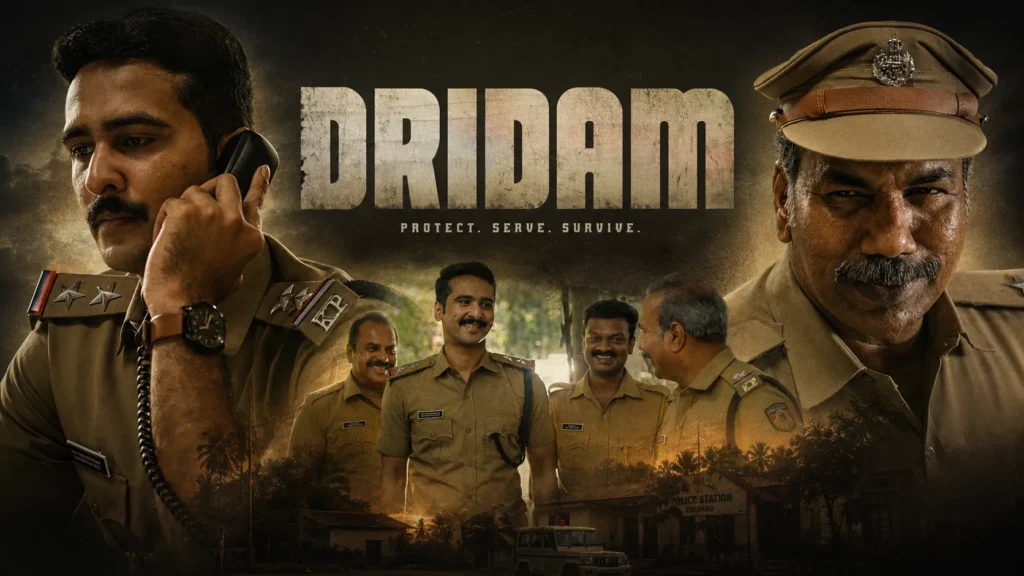
Dridam Movie Review: There’s that one point in the middle of Dridam when Shane Nigam’s young Sub Inspector gets a call on his cell regarding a crime and his response resonates with such a wrong level of emotion that the film’s biggest fault is quietly acknowledged there. It’s not about the panic or the investigation, it’s the personal heartbreak scene. The tonal muddle never abates or lets up in Martin Joseph’s long, and ultimately exhausting, thriller. It was all coming their way: a first-time cop, a hilly, distant village, the pressure of his superiors, murder, robbery, and suspicion.
However, the movie extends the same plot cliches without ever wrapping up the tension around them. Clues are graphically highlighted so much that the mystery almost fades away after a few scenes and the end of the day is almost unmemorable. What makes it ironic is that the only truly meaningful moment comes at the end in the climactic scene, which finally gives the intensity the film has been promising throughout.
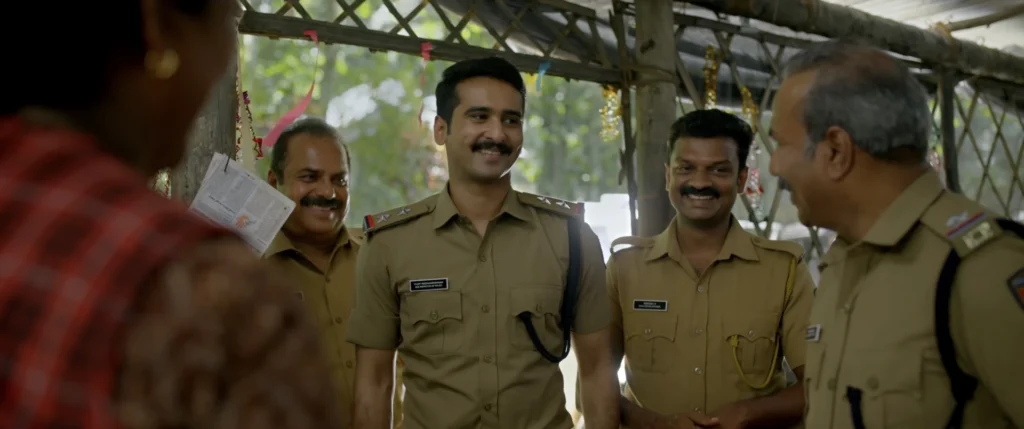
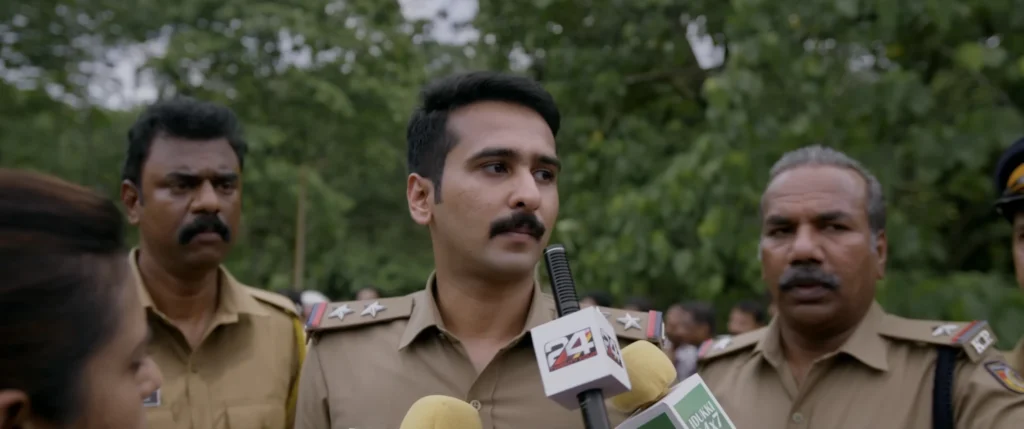
The movie, directed by Martin Joseph, is about a newly appointed Sub Inspector who is sent to a quiet hilly village where the farmer is the king and small town life prevails. There is no Circle Inspector at the station, therefore it is up to him. Initially, he thinks he is in a quiet assignment where nothing serious can ever occur. Shortly after he assumes power, he finds himself in the middle of a murder in his neighborhood.
Then a robbery at a bank leads to a panic throughout the region. The story then goes into investigation phase, and at the same time delves into the pressure from senior officers who don’t know whether a junior officer is fit enough to deal with the sensitive cases.
The setup on paper is very big. The premise for the first time officer who was in charge of the brutal crimes in a place he didn’t know the terrain of could have been an emotionally draining and psychologically taxing thriller. Unfortunately, the burden is never explored in the screenplay. I never got that fear, mental break down or tactical maturity that should come with such a situation.
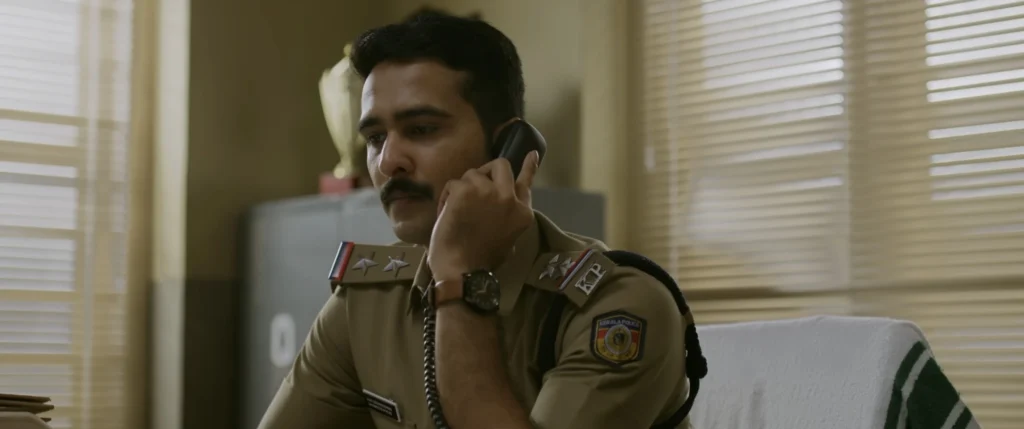
The one part of the experience that I remember is for the wrong reason. When Shane’s character gets a call about a crime, he seems somewhat disheveled from the professional attitude of a trained officer. The response is not urgent or calculated, but is like a disconsolate college student hearing bad personal news. Those emotional disconnects mar a few scenes.
The worst problem with the film is how predictable it is. The story never really develops the main tension for almost 45 minutes due to the introduction of characters, quirks of behavior, village dynamics, and suspicious details. One policeman does things one way, one policewoman does things another way, some villagers knows some things, and the film emphasizes all of this in such a way that is very clear that it’s important from the very beginning. It’s not a chickens coming home to roost situation. What matters is how loud the screenplay is.
Soon in the investigation I had come to the conclusion that I knew what happened. Even the man who came with me to the theatre was driven to the same decision well before the end. But the movie progresses and seems to be preparing for some earth shattering twist and turn. Through the climax, there will already be a lot of suspense annihilated. My response was just “Didn’t show this earlier?” The screenplay doesn’t trust the viewers enough to find something out by itself.
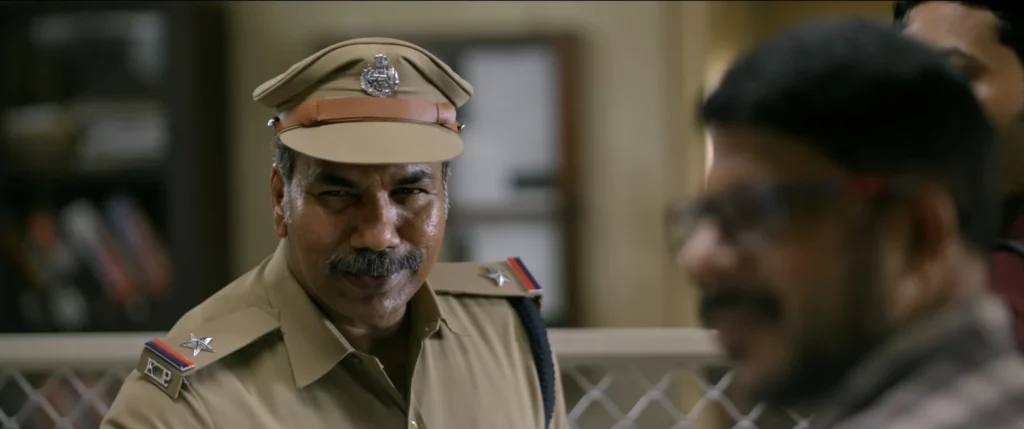
The film is a mixed bag in terms of performance. However, Shane Nigam attempts to play the part with a certain level of honesty, but is severely restricted by the writing. Some actors such as Shobhi Thilakan are seen to be too polite during the first few parts. Senior police officers and experienced officers act in an unusual manner, they are afraid and humble towards the new officer. That is not a feeling one normally gets in the middle of the police environment and it weakens the authenticity of it. These tonal inconsistencies could be fixed with a greater control of the direction and the interactions could be much more believable.
The film is not exactly great, but it’s okay. The cinematography by P. M. Unnikrishnan brings to life the hilly village ambiance but never becomes any more unique than the story itself. Vinayakh’s edit also leads to a dragging effect, as a few scenes last long beyond what is warranted. Sreerag Saji’s background score plays well in places, but even in the climactic moments, when it is expected to build like an investigation thriller usually does, the music isn’t particularly high-Notes on a pulse.
But the last few stretch did impress me! The climactic fight scene suddenly adds rawness and urgency to the movie. The action choreography done by Mahesh Mathew is physically menacing and the entire film lacks that sort of intensity. I liked the attempt to make grounded violence with the sound design and the make up effects. The stabbing noises, the blood effects and the physical violence could cause some viewers to be upset, but at least these scenes are vibrant and committed to the screen. But it’s also worth noting that makeup artist Ratheesh Vijayan did a great job of making the violence believable.
I also saw distinct parallels with Drishyam in terms of the spirit, references and tones. While there is no denying that Martin Joseph’s style is inspired by the films of Jeethu Joseph, those inspirations can be seen throughout the film. The only way to make up for a bad script is to be inspired. Dridam would have benefited from better writing, greater elaboration of clues, and better pacing. There is a lot there that could make for an interesting thriller, but it doesn’t always gel.
Ultimately, I walked out thinking that the film always promised to be intense, but there is never enough. Other than the actual good climax fight (which was the only thing I remember except for the bad one), not much else has stuck with me after the end credits. Nevertheless, when it all falls into place, it is this team that can create effective sequences. They could make a much more interesting thriller in the future with better writing and more unpredictable story.
Rating: 2.5/5