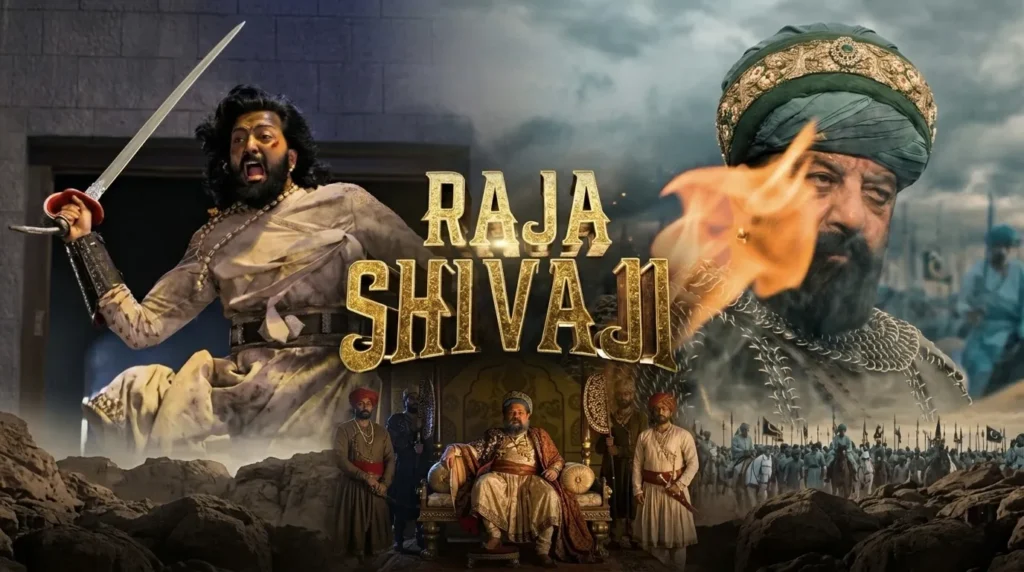
Raja Shivaji Movie Review: The very manner in which the battle scenes breathe, great frames extending just far enough, then snapping to sharp and deliberate strokes, tells you everything about Raja Shivaji. It is a movie that is obsessed with control, of movement, tone and legacy. Directing and leading, Riteish Deshmukh has a clear idea of the burden of the content. It on the film works awhile and this is because of this conviction.
The opening part is captivating. It creates a socio-political world that feels tense instead of decorative by the rise of Shivaji. Blended with the Ajay-Atul thunderous score, there are moments when one really feels something. However, as the run time increases and the show starts to shake, the movie starts to struggle with its ambition. It does not fall, but it does not fly, either.
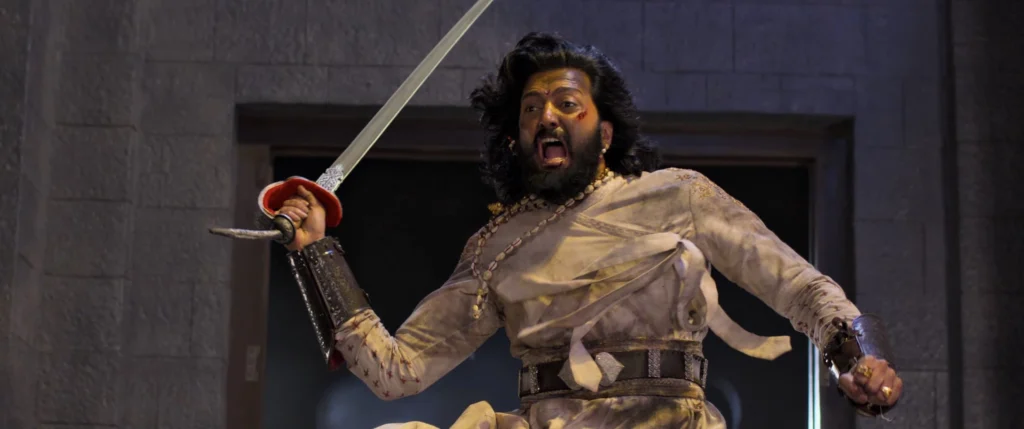
The film starts with a powerful confidence, directed and written by Riteish Deshmukh. His direction behind the camera is outstanding. The study has a layered feel and the story structure is lean. The presentation of Shivaji Maharaj is done with the backdrop of a superhero origin, but with a sense of contextualization. The movie creates a bleak socio-political environment in its very beginning, demonstrating how the rule of Mughal and Adilshahi triggered the situation to the point of breaking. The imperative of the emergence of Shivaji is well brought out.
It is the first half when the film really shines. Of special interest is the action sequences. Although the trailer suggested some inconsistent VFX, these concerns are much less distracting out of context. The dancing is truly applauded. It is not blind fighting. Each movement seems to be a tactical one, each blow is a calculated one. Long shots, planned zooms, and a diverse arsenal sit up a stratified visual experience. Notably, the movie does not follow the traditional pattern of one man killing interminable masses of people without even a single rational sense.

The things which can make these sequences even more impressive are the exceptional background score of Ajay-Atul. It is electrifying. A few scenes clang with actual truth, as much propelled by sound as by sight. Sometimes the music can be even more emotional than the dialogue behind it, and Shivaji Maharaj seems to appear on screen even more.
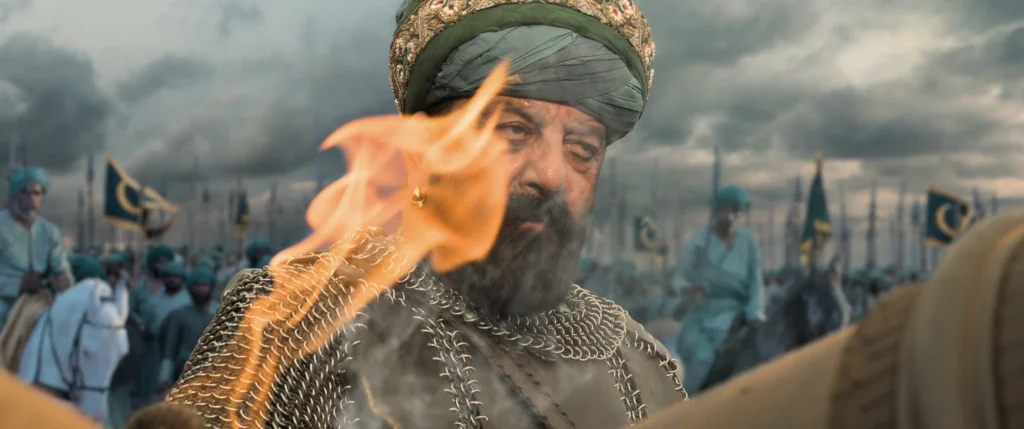
However, the performances are not even. Bhagyashree gives a very powerful, emotionally colored Jijabai, and she succeeds in playing her role. Vidya Balan makes a good impression too. However, the Afzal Khan played by Sanjay Dutt, is uninspiring. He is not useless, but the image has no threat and power. The character never transcends beyond functional.
Communication and the presentation of dialogues are the weak points that can be observed. Genelia Deshmukh has difficulty with the Marathi diction, and the effort is reflected in her pacing. Abhishek Bachchan uses the heavy, Amitabh style of vocal that is unfitting. Interestingly, in a small cameo Salman Khan looks more natural and believable. His presence is more weighty in common moments.
The biggest challenge to the film would be the central casting. Riteish Deshmukh is no doubt a talented actor, who has done good work across all genres, including Ek Villain. But a different kind of aura is required to represent Chhatrapati Shivaji Maharaj: physicality, or vocal gravitas. Comparisons become inevitable. Sharad Kelkar in Tanhaji, Chinmay Mandlekar, and Amol Kolhe have all made that presence felt in the role in one way or another. Even the iconic Mahesh Manjrekar performance of the sheet music in the song, Mee Shivaji Raje Bhosale Boltoy, has a more potent effect. More to the point, Vicky Kaushal in Chhaava reminds us of how vital that aura is. In this case, even though there are obvious efforts, the performance does not completely change. You can see the actor rather than the legend.
The experience was further enhanced by watching the film with a Marathi audience. It was hoped that there would be a high-charged atmosphere, particularly when it came to chanting Har Har Mahadev. But the answer was still very subdued. That emotional connector which is vital to a film of this kind does not seem complete.
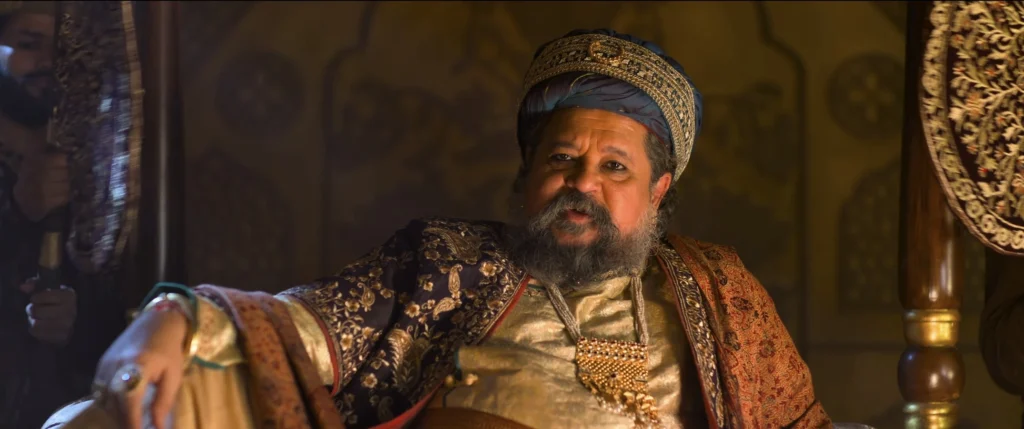
The movie is aesthetically astounding particularly given its alleged 100 crore budget. The scale is clear, and the battle scenes are performed with a grandeur. The second half however finds it difficult to keep up the pace. The run time starts to be strained and the storyline starts to lose some of its initial hold. To the viewers who may be more conversant with the history, the Afzal Khan climax comes as no surprise.
In spite of the weaknesses, Raja Shivaji is a valuable attempt. It is a very important effort in the Marathi film industry to put together a project of this magnitude and scope. That aspiration should be honored. However, ambition cannot guarantee emotional connection and that is where the movie fails.
Ultimately, Raja Shivaji is a nice one-time watch. It is strong in direction, music and action, weak in casting and emotionalism.
Rating: 3.25/5