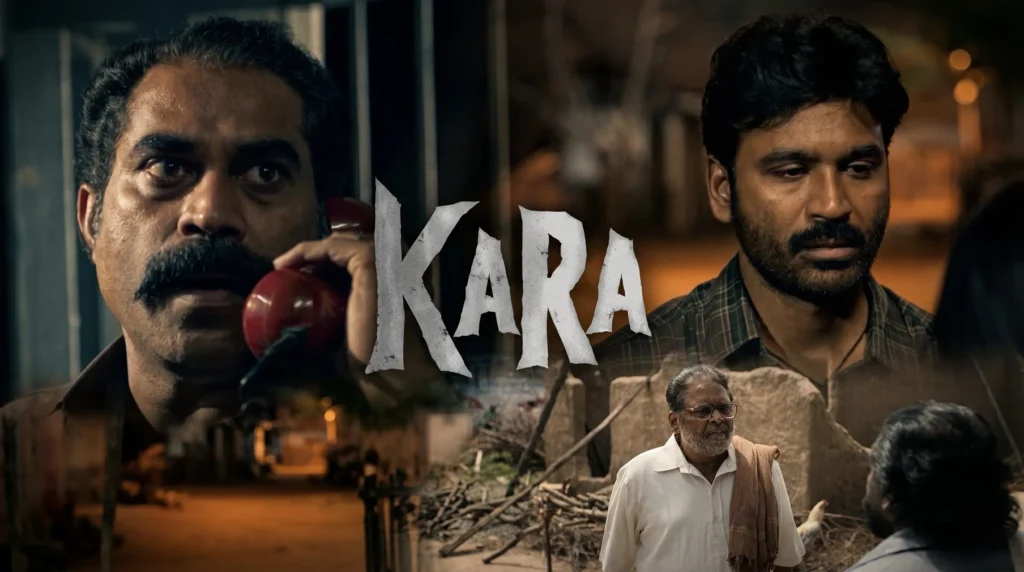
Under the direction of Vignesh Raja and the leadership of Dhanush, Kara opens as a stapled confrontation between an ethically grey thief and a fatigued cop. It is soon extended farther than that surface. The movie is more of a character tension than a plot machine, and the throbbing score by G. V. Prakash Kumar keeps the emotional and narrative action going, particularly at the point where the storyline slows down. Accompanying performances can provide depth without distracting the attention. The movie is not always lean, and the running time can be excruciating at times, but there is a purpose and reward, especially in the second half, which makes it more than just another crime thriller trying to seem serious.
Fundamentally, Kara is about a protagonist who is working in morally gray areas, almost as a kind of Robin Hood, and a dogged cop attempting to close one last meaningful case before retiring to duty. This interaction is always interesting since it is a psychological tug of war as opposed to a direct chase. Alfred Prakash and Vignesh Raka writing includes the elements of structural exploitation, especially in the manner in which corporate banks exploit economically vulnerable borrowers. It is not a subplot, it is one of the strongest ideological foundations of the film.
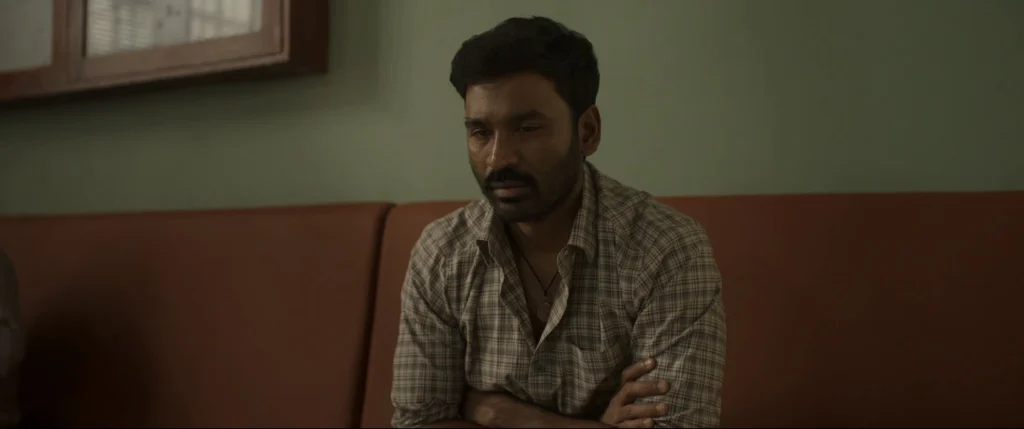
Cinematic allusions can also be found in the movie. A single moment reminds Devar Magan, when a father introduces a simple physical activity which will be repeated in a vital situation with references to the character of Dhanush. These touches provide a sense of richness to the film, giving it a layer more than a heist movie would have.
Meanwhile, it should be noted that movies such as Kara can be used to cross ethical boundaries. Although the story might seem inspirational, it can be best regarded as pure cinema. The act of theft no matter what the motive is, is crime and the movie does not ignore the repercussions of the same. It acts as a storyline and not an ethical approval.
Dhanush once again proves why he is one of the most reliable actors in the Indian cinema. He embodies the role in full, especially where it comes to scenes where he must be emotionally vulnerable and conflicted. His breakdown scenes are quite uncouth and unrefined, which grounds the movie well.
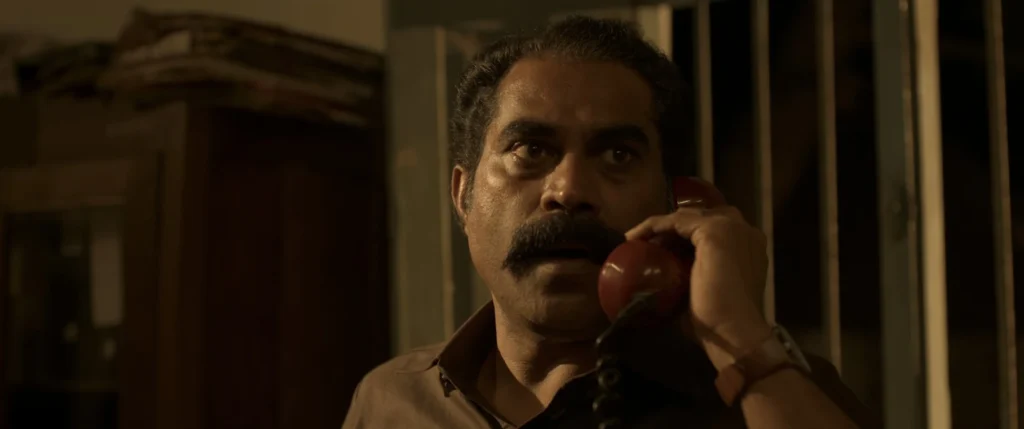
The supporting cast lends weight. Jayaram Karunas and Suraj Venjaramoodu perform their parts that fit perfectly into the story. Disclosing further would be an overkill of the major developments but their presence adds heights to the film. K. S. Ravikumar and Prithvi Rajan make a mark even with limited screen time.
On the female side, Mamitha Baiju is present in a very limited number but leaves a great impact. One of the most emotionally charged scenes is exceptional, as it brings out her honesty. Sreeja Ravi is a quiet powerhouse in her character, and she is an effective part of the story.
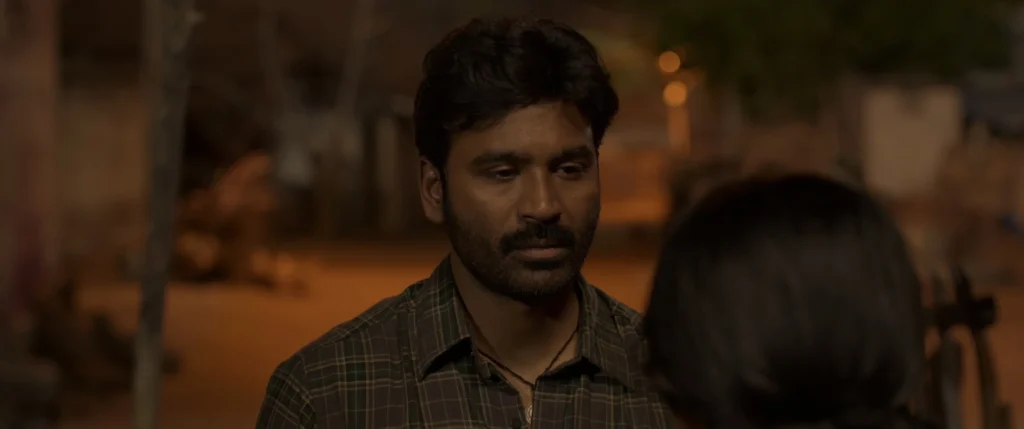
The movie is technically well done. The visual tone of the film is both raw and smooth, ground and involving courtesy of the cinematography of Theni Eswar. What is truly striking, though, is the background score by G. V. Prakash Kumar. It serves as the lifeline of the film especially in the second part, which increases tension, emotion, and the energy of the narrative.
The major weakness is in pacing. It begins with a heist that is sharply executed and sets a good pace at the beginning of the film. But this energy does not last long. The story gets sluggish shortly afterwards, passing into a lengthy father-son trajectory that, though necessary to character development, is stretched out.
The movie finds its footing once again by the break, and the second half has much more momentum. The greater part of the high points is here concentrated, and it is much more interesting than the first half. The uneven rhythm is still noticeable even so.
This is compounded by the fact that the runtime is almost 2 hours and 40 minutes. It is not the issue of ineffective editing since the cuts themselves are accurate. Rather some sequences are planned to last longer, which is a drag in itself without interruption of narrative flow.
In spite of these shortcomings, Kara is still an interesting watch. It is a good combination of action, emotion and social commentary, and the latter half of it is as effective as it balances its initial slow start. It is also not vulgar, thus it can be used by a larger audience.
Ultimately, Kara might not be consistent all the way through, but it provides enough emotional and narrative reward, especially in the second half, to earn a watch. It will be of greatest interest to the audience who loves character based crime dramas with a social touch.
Rating: 3.5/5